
Soil Texture Test (%Sand, Silt & Clay)
Soil Texture: Why It Makes A Difference
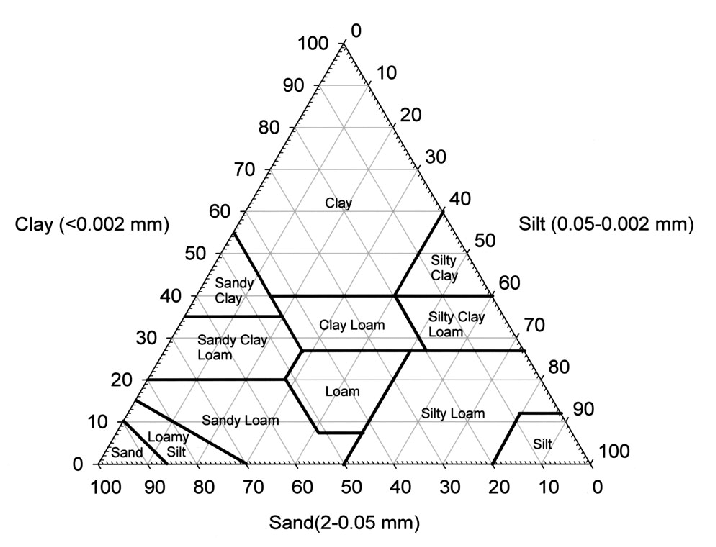
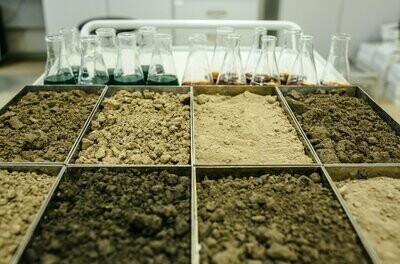
Soil is a mixture of mineral matter, organic material, air, and water. The mineral portion of soil is made up of particles that vary in size from stones to powder. These particles are called soil separates. The United States Department of Agriculture recognizes three major groups of soil separates: sand (2.0-0.050 mm), silt (0.050-0.002 mm), and clay (<0.002 mm). The relative proportions of these different-sized particles determine a soil's texture (see figure).
Soil Texture
Fine-textured soils contain a high percentage of clay and are very sticky when wet and hard when dry. Heavy soil was a term coined long ago when people found clay soils challenging (heavy) to plow. Coarse-textured soils have a high percentage of sand and are loose and crumbly. Coarse-textured soils are not sticky when wet and are easy to plow; hence the term light soil texture.
Texture is an essential characteristic of soil and affects water-holding capacity, drainage properties, root development, and more. Because texture significantly affects water movement through soil, it can also influence how pesticides and nutrients work in the soil. High amounts of clay soil particles can also bind up certain pesticides, causing differences in pesticide activity on soils with different soil textures.
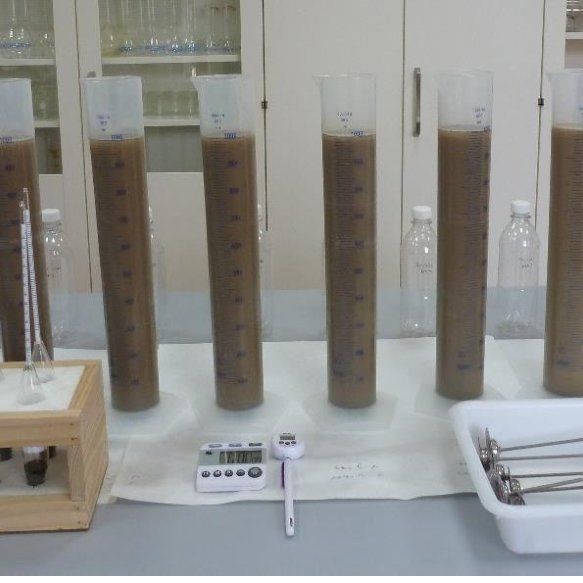
There are several methods used for determining soil texture, with the most common being the hydrometer method. In this method, soil particles are dispersed with a reagent and then agitated. After dispersion, the amount of each particle group (sand, silt, clay) is determined by using a hydrometer.
Why Septic Tank Installers Need a Soil Texture Analysis
Soil texture analysis is critical for septic system planning and installation. The texture of the soil determines its permeability—how quickly water moves through the soil—which is a key factor in designing a functional septic system. Soils that are too coarse, like sandy soils, may allow wastewater to pass through too quickly, reducing filtration and potentially contaminating groundwater. On the other hand, soils with high clay content may drain too slowly, leading to system failure and backups.
By providing precise measurements of sand, silt, and clay content, the Bouyoucos test gives septic tank installers the data they need to:
- Evaluate the suitability of the soil for a septic system.
- Determine the size and type of leach field required.
- Ensure compliance with local regulations for septic system installation.
Details of the Test
- Minimum Sample Size Required: 4-5 cups. This test requires a large amount of soil for an accurate analysis.
- Turnaround Time: 3-5 business days.
- Recommendations and Interpretations: Not provided with this analysis.
For septic tank installers and others in need of soil texture analysis, this test is an essential step in ensuring the success and longevity of your project. If you have questions about this test or how it applies to your needs, contact us for more information.
-1920w.png)